-

Much ado about (paying) nothing
A couple of days ago, we announced some more free goodies to Oracle Cloud. As most readers will know, we already had two free forever database offerings, our Autonomous Data Warehouse and our Autonomous Transaction Processing services. Smaller services? Both of these are fully fledged managed databases in their own right, and the new free… Read more
-

Big bits – really long bit strings
A while back we had an AskTom question about arbitrary length addition and subtraction, and so I whipped a small PL./SQL in this post. A similar question came in recently about converting decimals to binary, but once again for decimals of arbitrary length. So here’s a quick piece of PL/SQL for anyone wanting really a… Read more
-

New Podcast Episode! Every index is a bug
Every database has indexes…but should they? In this episode, lets consider a different proposition. What if the indexes you have on your database are a mistake…A bug… An implementation error. Give me 30 minutes to convince you of a whole new mindset when it comes to indexes on your database. Enjoy! I look forward to… Read more
-

Better performance when querying the V$ views
I’m a big fan of giving developers the tools they need to tune their applications in Production if that is possible. Clearly some times that will not be the case due to data sensitivity etc, but if a controlled, secure facility can be built for developers to see their applications “in the wild”, then my… Read more
-

UNLONG my dictionary – those pesky LONG columns
We’ve have all seen those TV crime shows where the psychiatrist does word association games, such as: Question: “Blue?” Answer: “Sky” Question: “Cat?” Answer: “Mouse” Question: “Up?” Answer: “Down” etc etc. And here’s the association that plagues developers and DBAs alike when they are querying the data dictionary. Question: “LONG?” Answer: “Aggghhhhhh!!!!” Anyone that has… Read more
-

(Offtopic) Month 1 is in the books…Thanks Sarah
Just a quick end of month blog post to give a shout out to Sarah Craynon Zumbrum who posted this on Linkedin a few weeks back. I think this is a wonderful call to action for an extremely worthy reason, so I figured I should a) show my support, b) get my fat ass off… Read more
-

Column names you should NOT use
We all know from our data modelling days… (Sidenote: Remember those days? You know…when we used to think about good design, good names, table and column comments etc …Ah good times. How I miss them ) … that naming objects is half the battle when it comes to a self-documenting your database and ultimately your… Read more
-

Level up your Zoom game
When Zoom first came into the conversation, we used it for remote meetings but a certain pandemic suddenly brought Zoom into a much sharper focus, and many of us are now using it for all parts of our job. So whilst my job has always meant a large percentage of my time was delivering content… Read more
-

"TWP" – technical white paper
Over the years, as I used to read various Oracle white papers I observed two things. 1) They were often PDFs prefixed with the acronym “twp”, which I assume (without confirmation) stands for “technical white paper” 2) They were often hard to find more than once Typically I hence would either bookmark them, or download… Read more
-
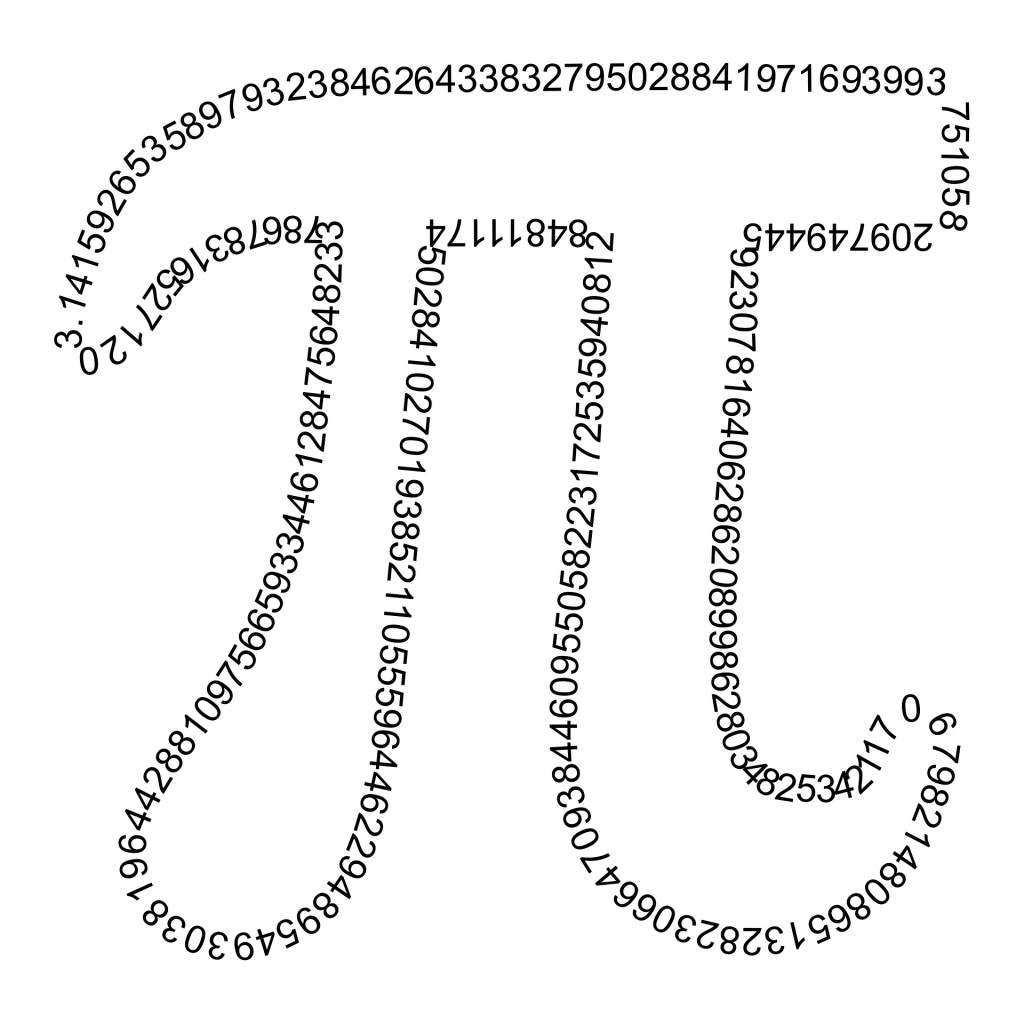
Pi day 2021
As friend Bruno put it so eloquently… …but every day is a good day to do some SQL. So here’s some SQL pi calculations I’ve tweeted out on this day over the years, that I thought I would capture here for posterity. SQL rocks. SQL> with t(n,p,s) as 2 ( select sqrt(2) n, sqrt(2)/2 p… Read more
-
New podcast episode! Block internals
I need to be honest right up front here. I’ve aimed for the skies and only time will tell if I’ve fallen short . Can it be done? Can you delve into the hex dumps, the byte headers, the acronyms all wrapped up in the magic that is an Oracle Database block with no slides,… Read more
-

DBMS_METADATA – hitting its limit
I was helping out a customer today with what they thought was a bug in DBMS_METADATA. They were using it to unload a complete set of DDL scripts for their schema, and their schema is big. Not big in the sense of data volume but in the number of database objects contained in the schema.… Read more
-
Subscribe
Subscribed
Already have a WordPress.com account? Log in now.
 Learning is not a spectator sport