-

SQL Macros – complex SQL made easy. Elapsed time calculation
The more you play with SQL macros, the more you find simple but powerful use cases which will make life so much easier as a developer. In the “good ol’ days” we only had the DATE data type in the Oracle database, and finding the duration in seconds between two dates is a breeze, because… Read more
-

The big table dilemma – what about transaction rates?
Yesterday I posted some demonstrations of the impressive power of indexes in relational databases for data retrieval even when those tables get massive in size. That resulted in a few comments on Twitter and on the post itself regarding the other half of the “equation”, namely, that my test was potentially biased in favour of… Read more
-

When does a table become too big?
I happened across an interesting thread on Twitter today which posed the question about when you should intervene with alternative solutions as a table gets larger over time: It is always good practice to be proactive on thinking about potential future problems before they occur because obviously it is better to solve them before they… Read more
-

Formula 1 data–staying up to date
Just an addenda to what I posted last week about downloading the Formula 1 motor racing data where I provided a script that would download the ANSI SQL compressed script decompress it and convert the ANSI SQL population script to an Oracle version drop the existing tables in your schema build and populate new versions… Read more
-

Database World 2021 – now it is your turn
Thanks for attending my talk on Futuristic SQL during Database World.If you missed it, or want to rewatch it at your own pace and run the demos alongside whilst you watch, you can view it here You can run all the demos I presented in your own database simply by downloading my demo script from… Read more
-
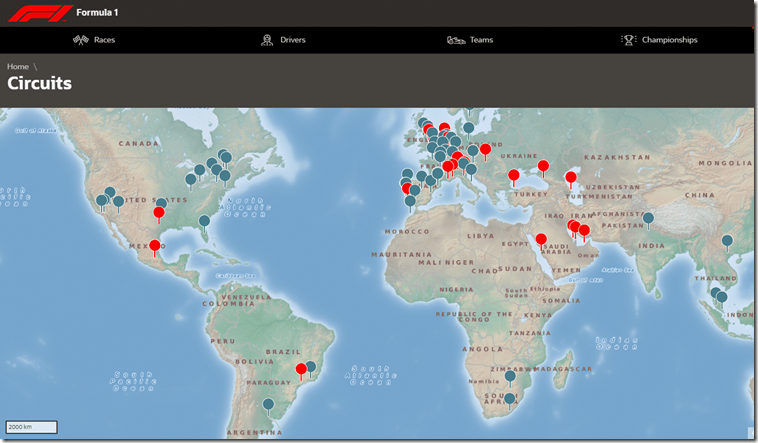
APEX demos – Formula 1 Racing Data ?
Naturally there was an overwhelming urge to title this post “The Need for Speed” and sprinkle Maverick and Goose references throughout it, but since Top Gun is about fighter jets and not about motor racing I resisted that urge. If you have been attending any of the APEX Office Hours sessions of late, you will… Read more
-

Quick and easy sample data
If you head over to the official database sample schema github repo you’ll find all the standard schemas that you’ll typically see features demonstrations on. There are seven schemas in total, namely HR OE PM IX SH BI CO If you’re are dinosaur like myself you’ll recall that the sample schemas used to be distributed… Read more
-

Keeping my SQLcl toasty fresh!
With the recent change to the licensing rules for SQLcl, a simple “yum” command on your Linux box gets you up and running with SQLcl in just a few keystrokes, and for most of my VM’s that is the way I roll. However, for some environments I work with, I don’t have necessary privileges to… Read more
-

New podcast episode! ORACLE-BASE enters the chat
What happens when you get two mates who haven’t had a chance to catch up at a conference like they normally would? You get a lot of chit-chat! Chances are, if you have Googled for help on an Oracle problem, you have ended up on a concise yet precise solution to your problem at oracle-base.com.… Read more
-

19c Express Edition #JoelKallmanDay
Since 18c, Express Edition (XE) has typically been my “Go-To” release of the Oracle Database. It is free, quick to install, contains virtually no limitations on the features and options that you are permitted to use and has sufficient space for me to hold a clone of the AskTom schema so I can test AskTom… Read more
-

The HOST command in SQL*Plus and SQLcl
Truth be told, the original title of this post was going to be “How I lost an entire day debugging datapatch which I thought had totally borked my database when trying to apply patch 19.12” but after some reflection and a few gin and tonics I’ve calmed down enough to describe the situation with more… Read more
-

Get the SQL_ID for a SQL statement BEFORE you run it
An AskTom customer asked the question recently: “We often use the SQL_ID to dig into the performance views once we have run a statement, but can we know what the SQL_ID for a statement will be in advance?” Normally this is a question I would not have probably considered “blog worthy” because it is a… Read more
-
Subscribe
Subscribed
Already have a WordPress.com account? Log in now.
 Learning is not a spectator sport