-

Quick Tip on Datapatch
When I patch my databases through the various Release Updates, I normally do a blog post showing how easy and trouble-free the experience is. Some readers sometimes claim that this is because I’m just shilling for Oracle and that I’ll never show any problems I encounter So to stake my claim of honesty, openness and… Read more
-

CloudWorld – Tuesday Turmoil
I took a quick glance at the schedule for Tuesday for CloudWorld and realised I’m going to need to clone myself to get along to the all sessions and labs that I’d like to see 😀. As I browsed through the schedule, the ones below jumped out as “Yeah, I’d like to get along to… Read more
-

What are the Squirrels doing? SQL fun and games
Finding interesting data to improve your SQL skills can be a nuisance. There are of course plenty of freely available data sets out there, but analysing mortgage repayments over a 10 year cycle is not my idea of fun data to play with. (Apologies to any home loan brokers etc out there ).🤣 But how… Read more
-

Patching just keeps getting easier
After attending a talk by Mike Dietrich at the DOAG conference, I was pleasantly surprised to hear that in 21c, there was no longer a need to patch the OJVM as a separate activity. But of course, being a natural cynic, I wanted to put Mike’s statements to the test. And yes indeed – patching… Read more
-

Can you FLASHBACK an IDENTITY column?
I’ve just got back from the DOAG conference, and what a fantastic event it was. I know I’m considered a “long time presenter” but this was my very first DOAG conference (not counting the virtual one from last year) and I was blown away by the enthusiasm of the attendees and the organization of the… Read more
-

INTERVAL partitions in multiple tablespaces
When the “STORE IN” clause is mentioned for partitioned tables, most people’s mind turn toward hash partitioning, because the usage of “STORE IN” within the documentation almost exclusively limited to hash partition examples. SQL> create table t1 2 ( x int, y int, z int ) 3 partition by hash ( x ) 4 partitions… Read more
-

XMLTABLE and data “corruption”
One of the cool things with the native SQL handling of complex datatypes is the ability to take something like XML, and with just a simple column mapping definition, get the data you want back in familiar rows and columns form, which typically is a better fit for all sorts of tools, applications and ultimately… Read more
-

The DBMS_REDEFINITION trap
Here’s something to be careful with when it comes to using DBMS_REDEFINITION. Let’s start with the following scenario. I have a table called REDEF1 and the primary key is the OBJECT_ID column. SQL> create table redef1 as 2 select 3 owner 4 ,object_name 5 ,subobject_name 6 ,object_id 7 ,data_object_id 8 ,object_type 9 from dba_objects 10… Read more
-
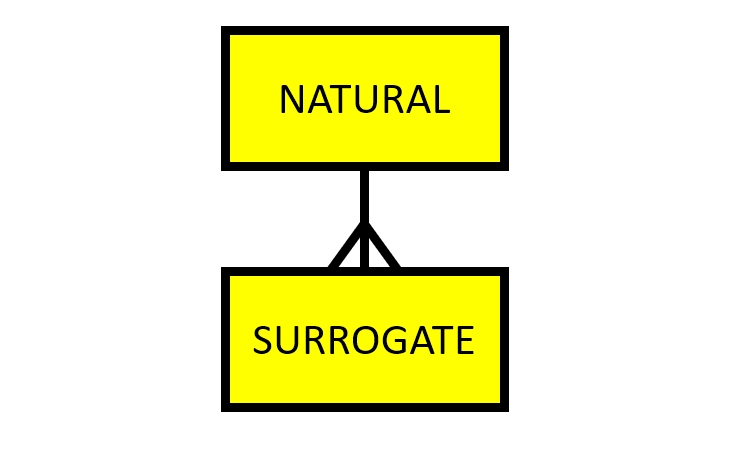
Natural Keys versus Surrogate Keys….Here we are again!
Well….that blew up! 😀 Last week I published a video (which you can watch below if you haven’t seen it) about the evolution of the ROWID. One particular demo in the video shows how the ROWID for a given row might change simply by issuing an UPDATE statement. Unsurprisingly, Twitter (as Twitter often does) totally… Read more
-

A simple benchmark harness
At my physical design talk at this year’s Yatra tour in India, one of the demos I do is multiple SQL*Plus sessions all smashing transactions at the database in order to simulate a high volume, high concurrency environment. After the session, one of the attendees reached out and asked for some details on how I… Read more
-

Powerpoint hack for tech presenters
Often when you are building a slides for a presentation you need to animate something on screen to show its transition from one state to another. For example, for a presentation I recently gave in India, I needed to show the state of rows in a block when that block was sparsely populated but I… Read more
-

Juice up your JSON on Autonomous
As many readers will be aware, we introduced a cool new JSON datatype in 21c which offers more features and better performance for JSON related features. Of course, whilst a new datatype is all well and good for 21c, many of us are not planning on moving to 21c because 19c is the long term… Read more
-
Subscribe
Subscribed
Already have a WordPress.com account? Log in now.
 Learning is not a spectator sport