-

From Database 18.3 to 18.5 (on Windows)
Contrary to wild rumours on the internet, it was not a fear of the number 13 that led to a numbering jump from version 12c to version 18c. The jump was part of our new, more flexible release mechanism so that we can get fixes and enhancements to customers on a more frequent and predictable… Read more
-

EXPORT not GATHER with DBMS_STATS
Just a short post today on something that came in as a question for the upcoming Office Hours session which I thought could be covered quickly in a blog post without needing a lot of additional discussion for which Office Hours is more suited to. The question was: “When I gather statistics using DBMS_STATS, can… Read more
-
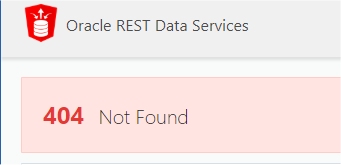
My APEX was fine and then it wasn’t
I got a nasty shock this morning when I fired up my local Application Expression installation. It had been working fine and all of a sudden…just dead. I sounded like all of those family members that as I.T practitioners we have to deal with (and that we’re so sceptical of) when they say: “I didn’t… Read more
-
2018-what grabbed your attention
Here are the blog posts that you hit on most this year, with the most viewed entry on top. Unsurprisingly it is about the release of 18c, but interestingly the ORA-14758 and the Active Sessions post have come up again from last years list, so it appears they are still common issues for the modern… Read more
-

Your New Years Resolution
Aligning roughly with the calendar year, based on the Chinese zodiak we’re about to go from the year of the dog to the year of the pig. But for me, in the “Information Technology Zodiak” , 2018 was the year of the hack, just as it was in 2017 and just as it will be… Read more
-

Another day…another "use the right datatype" post
Here’s an interesting little oddity (aka bug) with scalar queries. We’ll start with a simple working example SQL> create table t1 ( c1 number ); Table created. SQL> insert into t1 values (1); 1 row created. SQL> create table t2 ( c1 int, c2 varchar2(10)); Table created. SQL> SQL> insert into t2 values(1,’t1′); 1 row… Read more
-
SQL Injection – A Christmas Carol
You better watch out,Let me tell you a fact.If your SQL has literals,You’re gonna be hacked. SQL Injection is comin’ to town We’ve got a shared cache,It’s memory linked twice.But it only works well,When you’re binding all nice. SQL Injection is comin’ to town (bridge)We know when you’ve been lazy,And concatenated simple strings.So just make… Read more
-

Your AskTOM Top 10 for 2018
Here we go folks…here are the top 10 most viewed questions in AskTOM this year! We’ll count them down from 10 to 1 10) Inserting values into a table with ‘&’ Viewed 80,000 times. First asked in 2012, this actually is not a database issue but a client issue. Many client tools view ampersand as… Read more
-

It’s all downhill past 30
Yes, it sounds like a lamentation of the aging process, and from my own experience, it is definitely true that the wheels started falling off for my knees, back and plenty of other body parts once I turned 30. But that is perhaps a legacy of too much alcohol, not eating well in my youth… Read more
-

Automatic sequences not being dropped
One of the nice new things in 12c was the concept of identity columns. In terms of the functionality they provide (an automatic number default) it is really no different from anything we’ve had for years in the database via sequences, but native support for the declarative syntax makes migration from other database platforms a… Read more
-

The phantom tablespace
(Cueing my deep baritone Morpheus voice…) What if I told you that you can reference non-existent tablespaces in your DDL? OK, it sounds like a gimmick but there is a real issue that I’ll get to shortly. But first the gimmick I’ve created a partitioned table called “T” (I’ll pause here for your applause at… Read more
-

IRR function in PLSQL
We had an AskTOM question recently about how to calculate the IRR, ie, the Internal Rate of Return. To be honest, I had not really heard of the function, but readers were quick to point out to me that it was a commonly used function in the most “popular” database on earth, namely Microsoft Excel… Read more
-
Subscribe
Subscribed
Already have a WordPress.com account? Log in now.
 Learning is not a spectator sport